



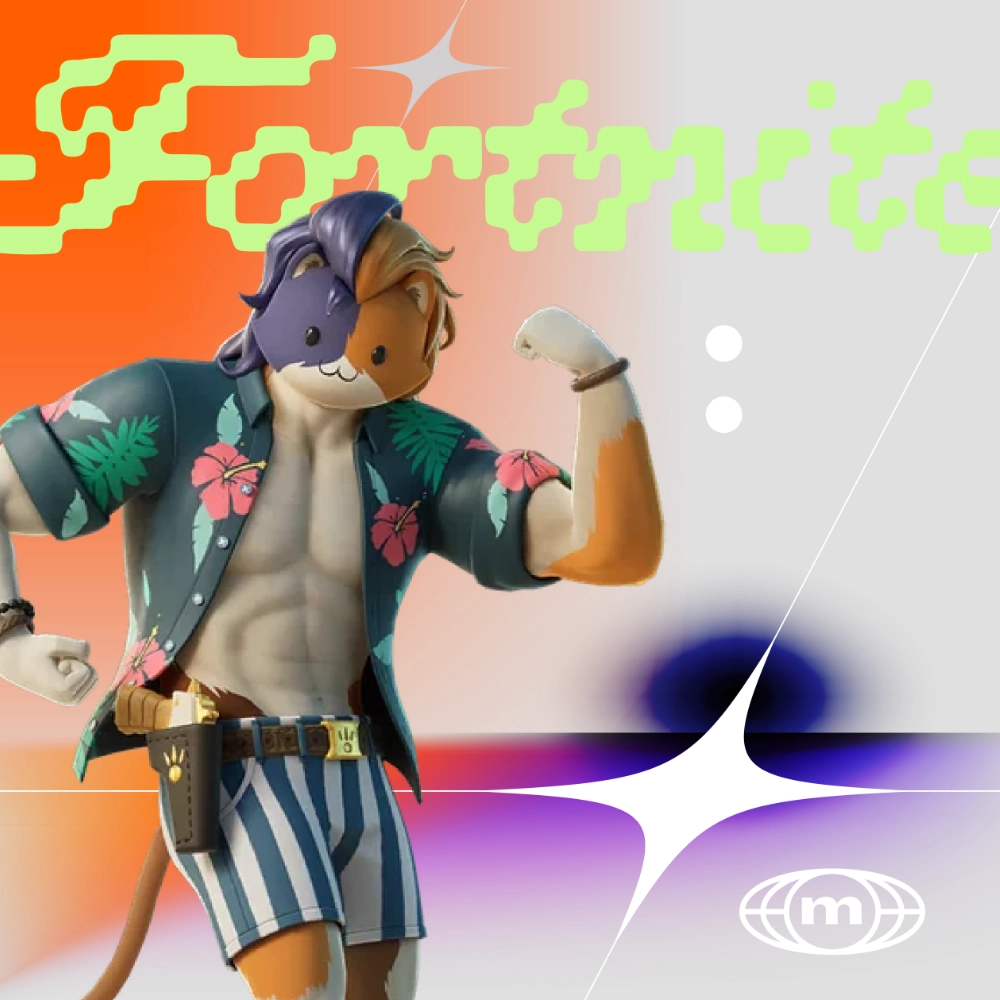
Fortnite's Brand is a Masterclass in Reinvention
Short version: Fortnite isn't just successfull because it's fun to play. It's a great because it's a living system.
I design brands and websites for creators and startups, so I spend a lot of time looking for lessons in places that aren't design conferences. Lately the most useful one has been a game I'm objectively too old to be this good at.
Fortnite is very fun.
I am writing this so I don't procrastinate by playing more Fortnite.
Fortnite changes constantly and makes the change the point. New seasons, live in-game events, entire map wipes — the brand is built to move. That willingness to experiment in public is why it never feels stale.
The lesson is that a good brand system is built to flex — to launch a new product, run a weird campaign, or shift direction without the whole thing falling apart.
If your identity can only exist in one frozen state, it's not a brand. It's a screenshot.
Consistency is the foundation
Fortnite can reinvent itself every season because the core is rock-solid. The logo, the type, the color language, the tone — those barely move.
That consistency is the anchor that lets everything else drift.
Recognition is a compounding asset. When your colors, typography, and voice stay consistent across your site, your packaging, your pitch deck, and your Instagram, every touchpoint makes the next one stronger. When they don't, you're paying to re-introduce yourself every single time.
This is the single most common thing I fix for new clients: not bad taste, just no system. A logo here, a random Canva template there, three different blues depending on who made the file that day.
Consistency isn't the boring part of branding. It's the part that makes the money.
Worldbuilding
You don't get sold to. You get invited in.
People don't form emotional connections with discount flyers. They connect with a point of view, a personality, a sense that there's an actual human (or a coherent worldview) behind the thing.
For a small brand: have a perspective and express it everywhere. What do you believe? Who is this for, and who is it pointedly not for? A brand with an opinion is worth ten brands trying to be liked by everyone.
You don't need millions of players. You need a small group of people who feel like the brand is partly theirs. That comes from listening in public, shipping things they asked for, and treating your audience like collaborators instead of a conversion rate.
In an era where AI can spit out a decent-looking logo in four seconds, the durable advantage isn't the asset. It's the relationship. While design gets commoditized. Belonging doesn't.